
7 Churches of the Book of Revelation

reminder_o2mj81coq6r2Date
Tour Price - GBP
Tour Price - ZAR
Book NOW
15th - 20th May 2024
From £788
From R18 518
2nd - 7th June 2024
From £790
From R18 565
10th - 15th July 2024
From £795
From R18 685
3rd - 8th Sept 2024
From £795
From R18 685
14th - 19th Oct 2024
From £788
From R18 518

Tour Itinerary

Indulge in an unforgettable journey through Asia Minor and discover the teachings of the 7 Churches of the Book of Revelation in Asia Minor.
7 Churches
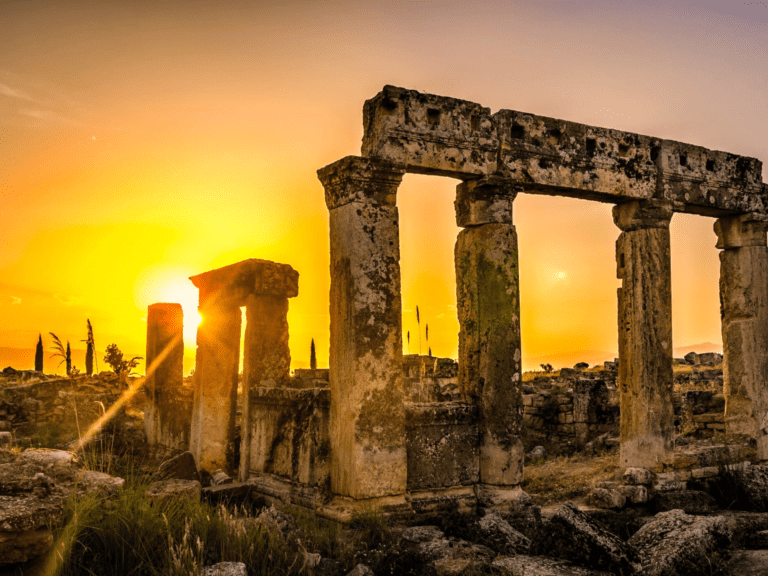
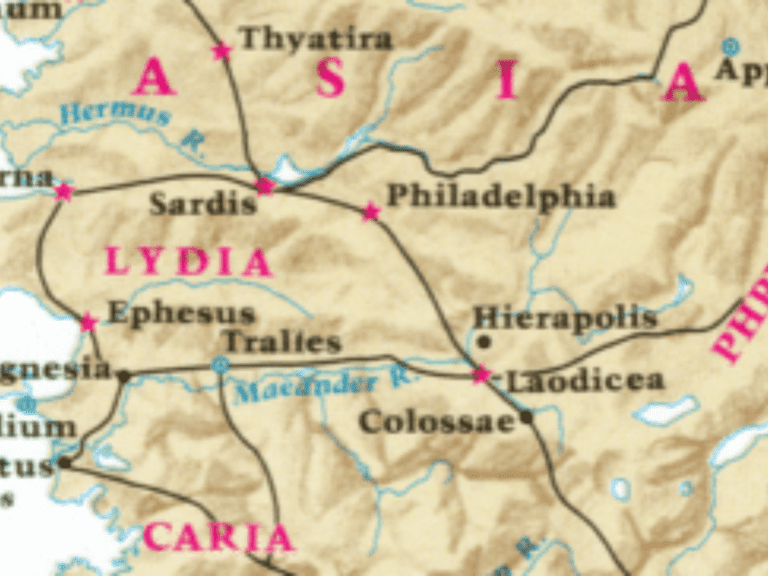
Ephesus, Smyrna, Pergamum, Thyatira, Sardis, Philadelphia, and Laodicea were literal churches that existed in Asia Minor (modern Turkey) during the first century A.D. Named for their geographical locations, the churches were strategically located along a major Roman road.

Ephesus - The Loveless Church

Known as the loveless church, was located at a major harbour on the Aegean Sea and housed one of the seven wonders of the ancient world (a temple to Artemis).

Founded by Paul, this was the most prominent church in Asia Minor and the 4th largest city in the Roman world. There was widespread slavery, prostitution and idol worship throughout city and gladiator fights were held in 10.000 seat stadium.

Ephesus was an ancient Greek city, located in present-day Turkey. It was one of the most important cities in the ancient world, known for its strategic location, as well as its cultural and economic significance. Ephesus was a major centre of trade and commerce, with a bustling port that connected it to other cities around the Mediterranean.

One of the most famous landmarks in Ephesus is the Temple of Artemis, which was considered one of the Seven Wonders of the Ancient World. The city was also home to the Library of Celsus, an impressive ancient library that stored thousands of scrolls and manuscripts.

Ephesus was a hub of culture and learning, attracting scholars, philosophers, and artists from all over the ancient world. The city was also a centre of early Christianity, with the Apostle Paul visiting and writing to the Ephesians. Today, Ephesus is a popular archaeological site, attracting visitors who come to marvel at the well-preserved ruins and learn about the city.

The Terrace Houses are now open for viewing. Along Curetes Street, just behind the shops near the Library of Celsus there are six luxurious residential buildings that were in use from the 1st century AD through the 7th century AD. Because of their location on the slopes of Mt. Coressus they have become known as the Slope Houses or the Terrace Houses.
 
The letter to Ephesus warns against false teachers and evil in the world and admonishes for having forsaken their first love.
Revelation 2:1 -7

Smyrna - The Persecuted Church

The home of Homer and the temple of Athena, was a beautiful, bustling seaport. In the second century A.D., Rome martyred Polycarp, its bishop.

There was no rebuke for this persecuted church. Although they were continually under physical hardship, the people of Smyrna were promised that they would not be hurt by the second death. They were encouraged to stay faithful, even when facing physical death.

Wealthy city - popular in science, medicine end architecture.
A very political city with persecuted and poor christians.
Massive pagan worship to goddess Cybele.
Had a day to cut themselves and dance in the temple.
Male priests were castrated and called the third gender.
Oracles and spirits would speak through a priestess.
Christians were poor but had faith and loved the Lord.
Revelation 2:8-11

Pergamum - The Worldly Church

This is the location of Rome's provincial capital, was a major cultural hub that housed a library rivaling the famed Alexandrian library.

This church was also known as the tolerant church. Although they refused to deny Christ, they allowed sin like idols, immorality, cults and heresies to remain among them.

It was located on a hill - and was once the capital of Asia Minor.
They had temples to Caesar and Zeus - A stronghold city for idol worship.
Patron goddess Athena was to protect the city.
Jesus called it the place where Satan dwells.
Antipas was martyred here.
Nicolaitans promoted a distorted "extreme grace" doctrine.
 
Revelation 2:12-17

Thyatira - The Wrong Doctrine Church

The church of Thyatira had love, faith and good works. They were even patient people who were eager to grow. Where they fell short was their doctrine, which was infiltrated by idolatry, sexual sin and pagan traditions.

it was a small town in Asia Minor and well known for it’s colourful dyes.
It was in a valley with many trade routes through it
Acts 16:14 - Lydia was a seller of cloth
The chief deity was Apollo - linked with the power of the sun.
They allowed Jezebel to seduce the servants of God.
 
Revelation 2:18-29

Sardis - The Spiritually Dead Church

Almost all of the people in the church of Sardis had fallen asleep spiritually, except for a small remnant of believers. The Dead Church was encouraged to kindle and revive any small bit of faith they had left.

It was known for it's carpet industry.
The city was destroyed by an earthquake.
Gold was found nearby and made the kings very wealthy. They had a Royal Road connecting it to Persian cities
Their chief deity was Artemis - the mother goddess.
 
Revelation 3:1-6

Philadelphia - The Spiritually Alive Church

Known as the "Gateway to the East, was renowned for its grapes, textiles, and leather goods.

Philadelphia did well. There was no rebuke for this church of faith. They kept the name of Jesus and never denied it. There is a promise in the kingdom of heaven for these Christians.

It was located an the foot of a mountain West Central Turkey and an important travel route linking to to Laodicea.
The city was destroyed by an earthquake and people remained in fear.
The city was rebuilt by Emperor Tiberius.
There was a lot of agriculture, wool and wine making due to the ground in this region.
They also produced a lot of leather.
 
Revelation 3:7-13

Laodicea - The Lukewarm Church

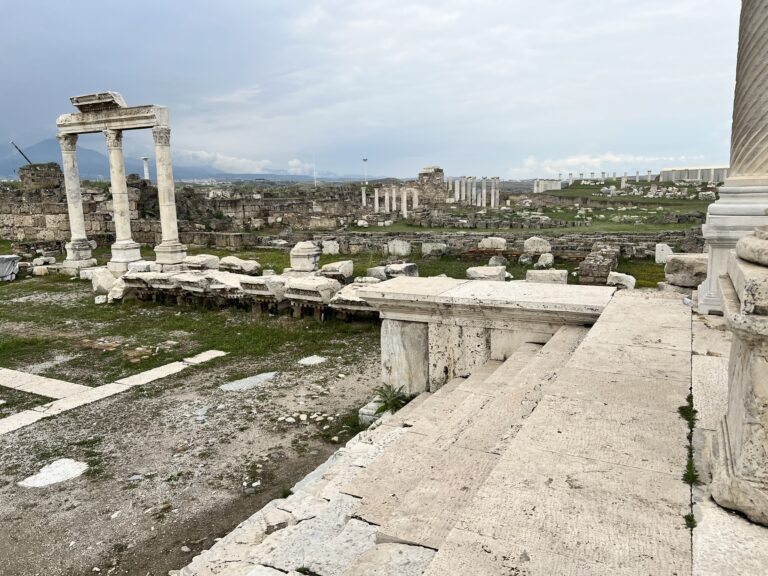
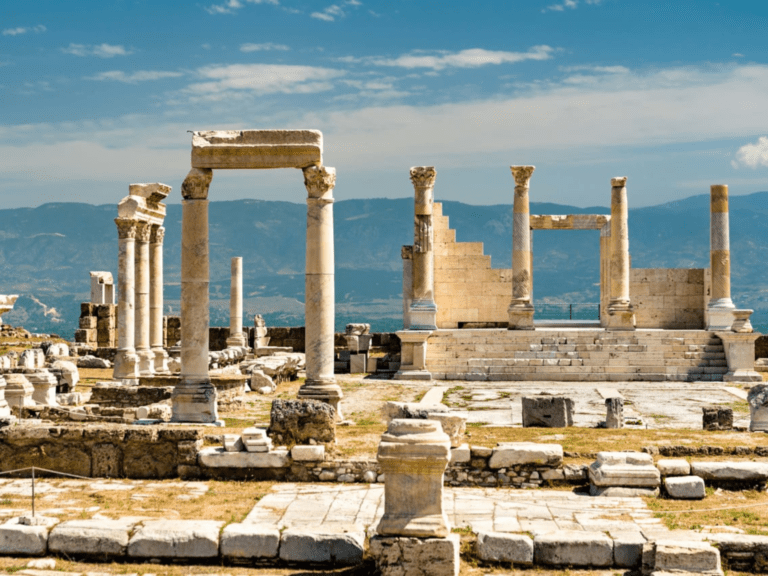
Laodicea lay in Phrygia’s Lycus Valley, ten miles west of Colosse and six miles south of Hierapolis. Pagan worship, especially of Zeus but also of numerous other deities flourished there.

We know from Acts 13:14–50 and 14:15 that a significant Jewish community lived in and around Laodicea. However, they seem to have blended into Greek culture in many respects. We know this because, by the third century, illustrations on some coins had mixed together Jewish and pagan versions of the Flood stories.

Laodicea boasted great resources, but had a poor water supply. Ancient sources state that it was full of sediment, and excavation of the city’s terra cotta pipes reveal thick lime deposits, which suggest heavy contamination. Because Laodicea had to pipe in its water, it grew lukewarm by the time of its arrival.

The point of lukewarm water is simply that it is disgusting, in contrast to the more directly useful “hot” and “cold” water.

Jesus thus finds the church in Laodicea to be other than what he desires  (Isa. 5:2–6).

In today’s English, he is telling the self-satisfied church in Laodicea: “I want water that will refresh me, but you remind me instead of the water you always complain about.”

Revelation 3:14-22

Included

Excluded

Tour Plan

Day 1 - Arrival in Izmir, transfer to hotel

Welcome to Turkiye.
 
Arrive at Izmir Airport, Our representative will meet you at the airport with a Travel Daze sign and private transfer to the hotel for dinner and overnight stay in Izmir.
 

Day 2 - Visit Pergamum and Thyatira

At 8:30am, our guide will meet us at the hotel lobby after breakfast and take us to Pergamum, also known as Bergama.
 
This historical site is one of the Seven Churches of Asia, mentioned in Revelation 1:11 and 2:12.
We will have the opportunity to explore the magnificent Acropolis, which houses the steepest theatre in the world, as well as the Asklepion, a renowned medical center from classical times.
 
Additionally, we will see the Altar of Zeus, which is mentioned in the book of Revelation as the "Throne of Satan," the marble columns of the Temple of Trajan, and the Library, which was once a rival to the famous Library of Alexandria in Egypt.
 
The Library of Pergamum was the foremost in the world and contained an estimated 200,000 volumes, inspiring the invention of parchment. It is sure to be a fascinating and educational experience.
 
Then we continue our visit to Thyatira, now called Akhisar, another one of the Seven Churches of Asia [Rev. 1:11; 2:18-24; Acts 16:14]. It was a city famous for purple dyes. We visit the remains of a basilica and some architectural fragments from the Roman period. Lydia, the seller of purple in Philippi, was from Thyatira.
 
Lastly we enjoy a panoramic ride of Smyrna, the third largest city in Turkey and one of the sites of the Seven Churches of Asia [Rev. 2:12-17]. Smyrna is a city scarred with a bloody history of trade and warfare. We will also view the Clock Tower.
Check in at the hotel for dinner and overnight.

Day 3 - Visit Smyrna Agora, Sardis, Philadelphia and Hierapolis

This morning we will start our visit at the Smyrna Agora.  Nestled in modern-day İzmir’s historic city center’s core, it is one of the largest agoras in the world that witnessed the Roman Empire.
 
Thereafter,  we depart to one of the most picturesque areas of any of the Seven Churches of Asia [Rev. 1:11; 3:1-4], Sardis, presently Sart. This was the capital of the ancient Lydian kingdom of the 6th century BC, portrayed as a dying church. We visit the great Temple of Artemis and restored gymnasium and reconstructed Synagogue. We also see the last several meters of the royal Persian Road from Susa to Sardis built by Cyrus the Great and the "golden" river Pactolus.
 
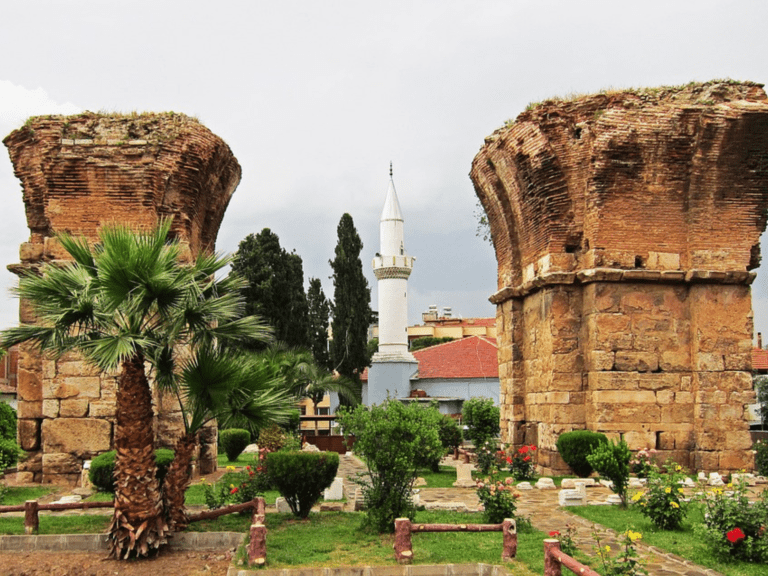
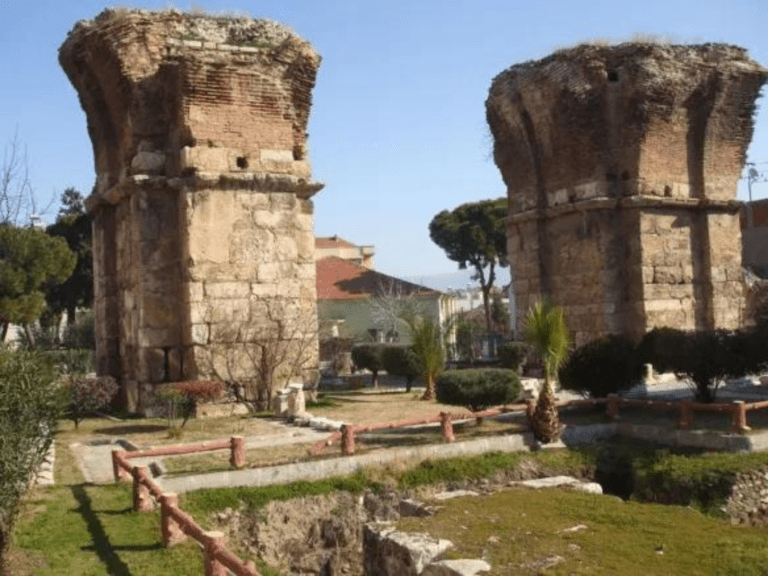
Then we continue our journey to Philadelphia, these days called Alasehir, another church of the Seven Churches of Asia [Rev. 1:11; 3:7], and the only church not censured. There we see the remains of a Byzantine basilica built of brick, with a bit of high arch and some 11th century frescoes.
 
We drive to the healing city of Hierapolis, actually Pamukkale, the white "cotton fortress" where hot mineral water bursts from the earth and cascades over steep cliffs forming pools, channels and stalactites. The therapeutic waters were known to the founders of Hierapolis and of Laodicea in 190 BC.
 
Check in at hotel for dinner and overnight in a Thermal Hotel.

Day 4 - Visit Laodicea and Ephesus and overnight in Kusadasi

After enjoying breakfast this morning, we embark on a scenic drive Laodicea and thereafter Ephesus to explore the ancient city's captivating history.
 
Laodicea, established in the C3 BCE by the Seleucid Antiochus II, the city was named after his wife Laodicea. Built on the Lycus Tributary of the Meander River, it was surnamed Laodicea on Lycus, to distinguish it from other similarly named cities. Laodicea is the last of the seven churches. As a crossroad of two important roads, this city had an important commercial and logistical position.
 
Ephesus is known for its significant place in the Christian faith as the Apostle Paul preached to the Ephesians and even lived here for three years. In fact, the church in Ephesus received an epistle from him. Today, we have the opportunity to tour the remarkable ruins where excavations are still taking place in this once great and vital city founded in the 10th century BC.
 
As we stroll along the marble streets, we'll be transported back in time as we take in the magnificent public buildings, such as the Baths of Scholastica, the Library of Celsus, the Temple of Hadrian, and the Theatre.
 
The Temple of Diana of the Ephesians, another of the seven wonders of the ancient world, was also built in this city.
Our tour also includes a visit to the Basilica of St. John and the House of Virgin Mary before we drive to Kusadasi, where we will spend the night after dinner.
 
Overall, our visit to Ephesus promises to be an awe-inspiring journey through history, where we can experience the rich culture and heritage of this ancient city.
Return to our hotel for dinner and overnight.

Day 5 - House of Virgin Mary, St. Johns Basillica and Transfer to the airport for our flight home

This morning after breakfast, with packed bags, we visit the Basilica of St. John and the House of Virgin Mary before we are transferred to the airport for our flight home.
 
As we prepare to head back home, we take some time to reflect on all the amazing memories we’ve made.
 
Whether it's the stunning scenery we have witnessed, the delicious local cuisine we tried, or the new friends we made along the way, these experiences will stay with us for a lifetime.

Sadly, all good things must come to an end.

Be sure to book your next tour soon.

Optional Add Ons- Pre or Post Tour

Tour Tip

Book your place now without delay. The following is required on registration:

  • A valid passport with 6 months still to go prior to expiry.
  • UK passport holders do not require a visa to visit Turkiye. South African’s can apply for a free visa online  – https://www.evisa.gov.tr/
  • Deposit of £150 / R3500 secures your place.
  • The balance is payable 10 weeks prior to departure.

All prices are per person, based on double, twin or triple share occupancy. Solo passengers not wishing to pay a single supplement will be accommodated in a double, twin or triple room according to availability with a passenger(s) of the same gender.

Please note : This tour begins and ends in Izmir

Book Now

You may increase the booking quantity should you be paying for more than one passenger. Payment is made via our secure payment partner Stripe.com. There are two payment options:

  1. Full amount 
  2. Deposit – balance payable 10 weeks prior to departure.

Register Now

Register for 7 Churches

Once the payment is complete please return to this browser and complete your registration for the tour - if more than one passenger was paid for above please fill in the details separately but upload the same Stripe payment or deposit confirmation pdf. 
** Please note that this trip is based on a minimum of 22 PAX